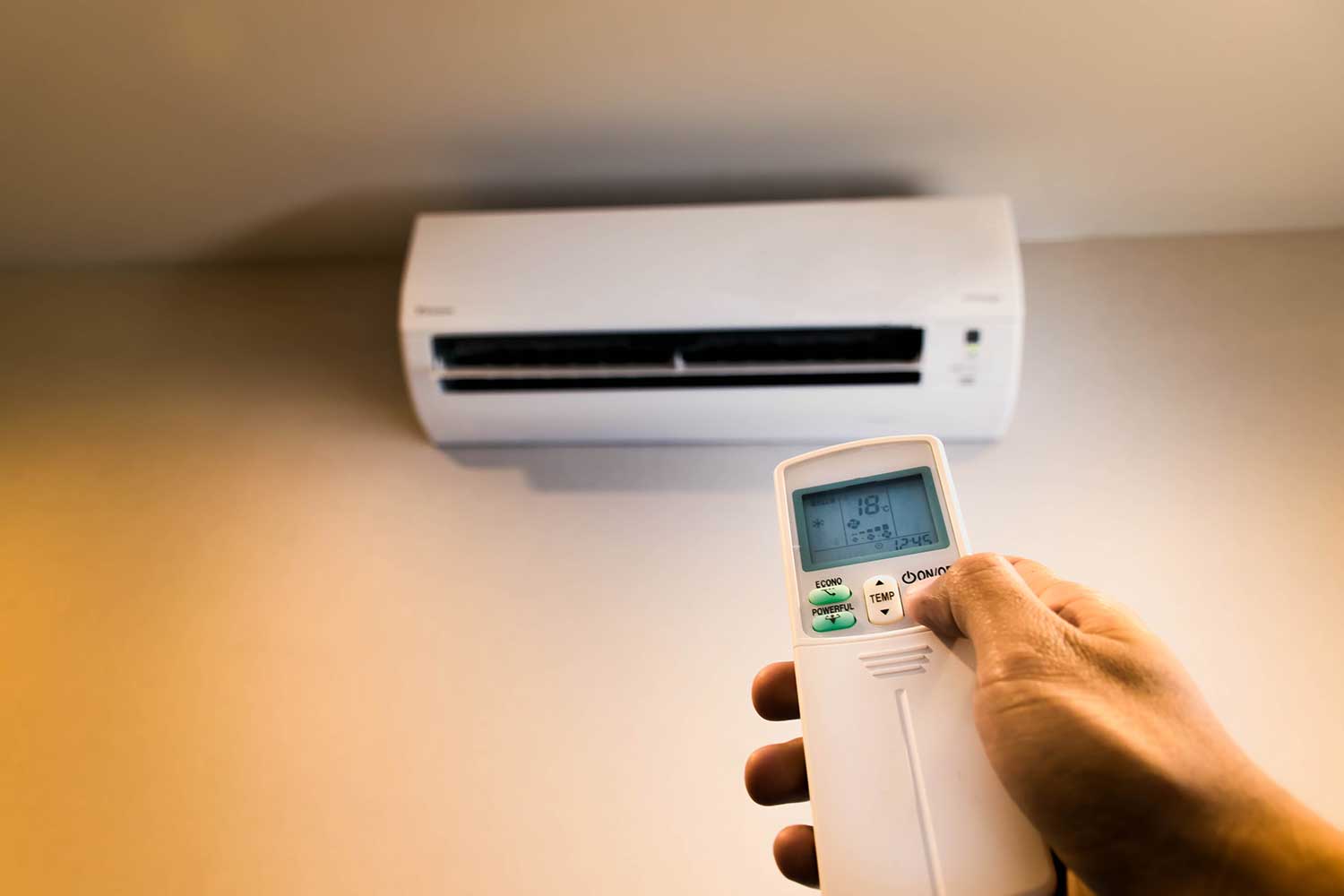
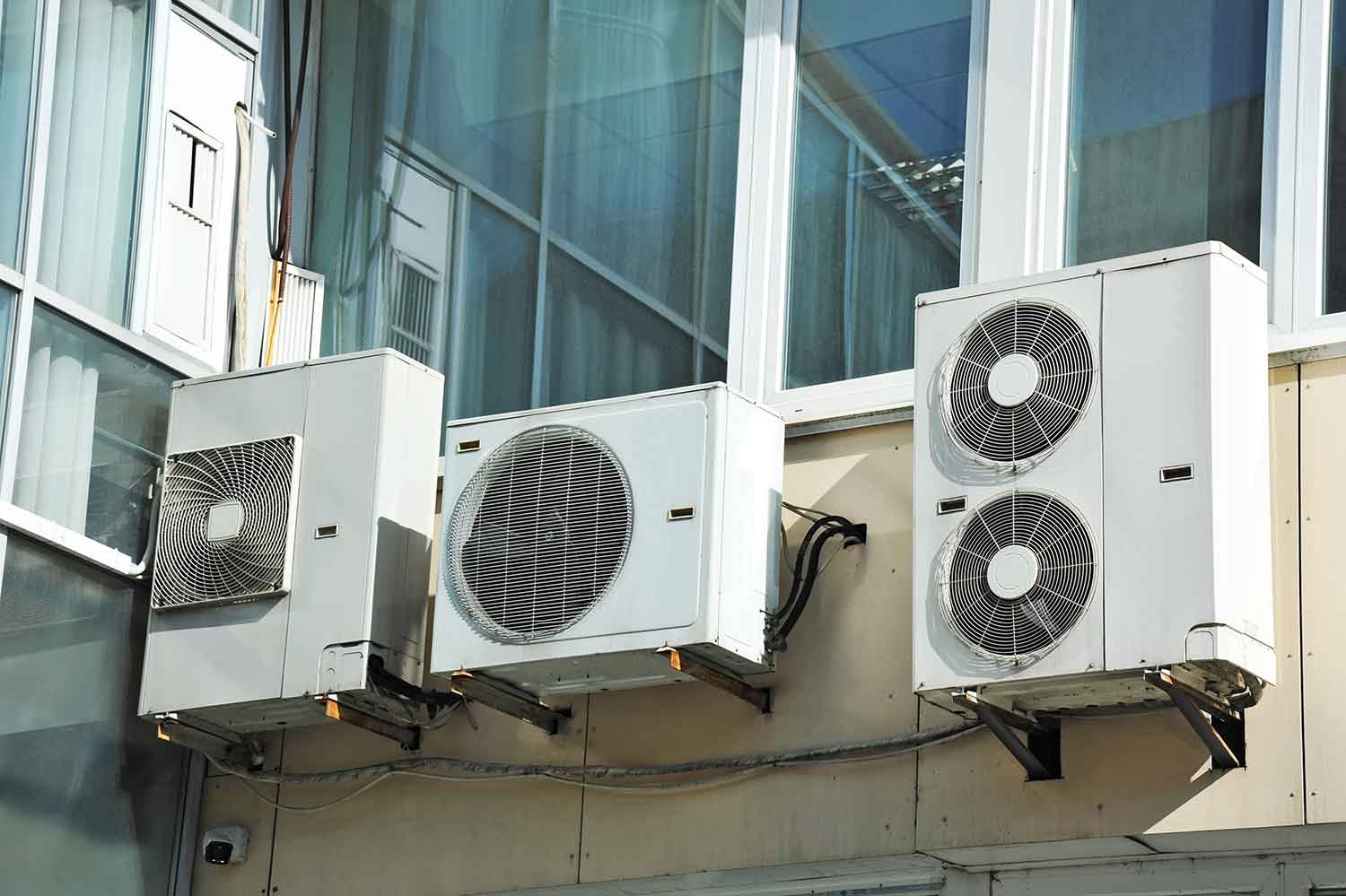
Air conditioning creates and maintains required temperatures, humidity, and air quality in enclosed spaces. Commercial air con systems are used in the cooling, heating and dehumidifying of the air in small, medium or large business premises.
Commercial air conditioning systems can be used to maintain the optimal temperature and air quality in offices, stores, cafes, restaurants, colleges, recreation centres, gyms, and other commercial property and ensure that clients and employees remain cool in the summer and warm in the winter.
The air from inside a room will be taken by an air conditioning system and heated or cooled to the temperature you have set it to. Then the same air is recycled back into the room to maintain the temperature.
Other standard terms for air conditioning are AC, A/C, or air con. There are several different systems with separate heating and cooling capacities and settings on the market, so it is always necessary to ensure that you have a reputable commercial air conditioning company to help you select the most applicable system for your company and property. There are different ACs with different cooling and heating capacities. So it is imperative to contact a professional who will assist you in choosing the best air con units that cool or heat the air from a closed room to the required temperature.
How does Commercial Air Conditioning System work?
Many commercial air con units mix the refrigerant (compressed gas) in a closed split system that reduces the temperature or cools down the air. The air inside the air con unit is being condensed. The outside air is often what is used when the refrigerant is condensed. Or more simply, the AC unit gathers or collects air from an enclosed space, processes it with the help of a refrigerant, and then gives out the cool air from where the air was collected.
The Difference between Commercial Air Conditioning and Domestic Air Conditioning Systems?
AC is used both for domestic and commercial purposes. But the significant difference between domestic and commercial air conditioning is the amount of energy and how frequently the system will be used.
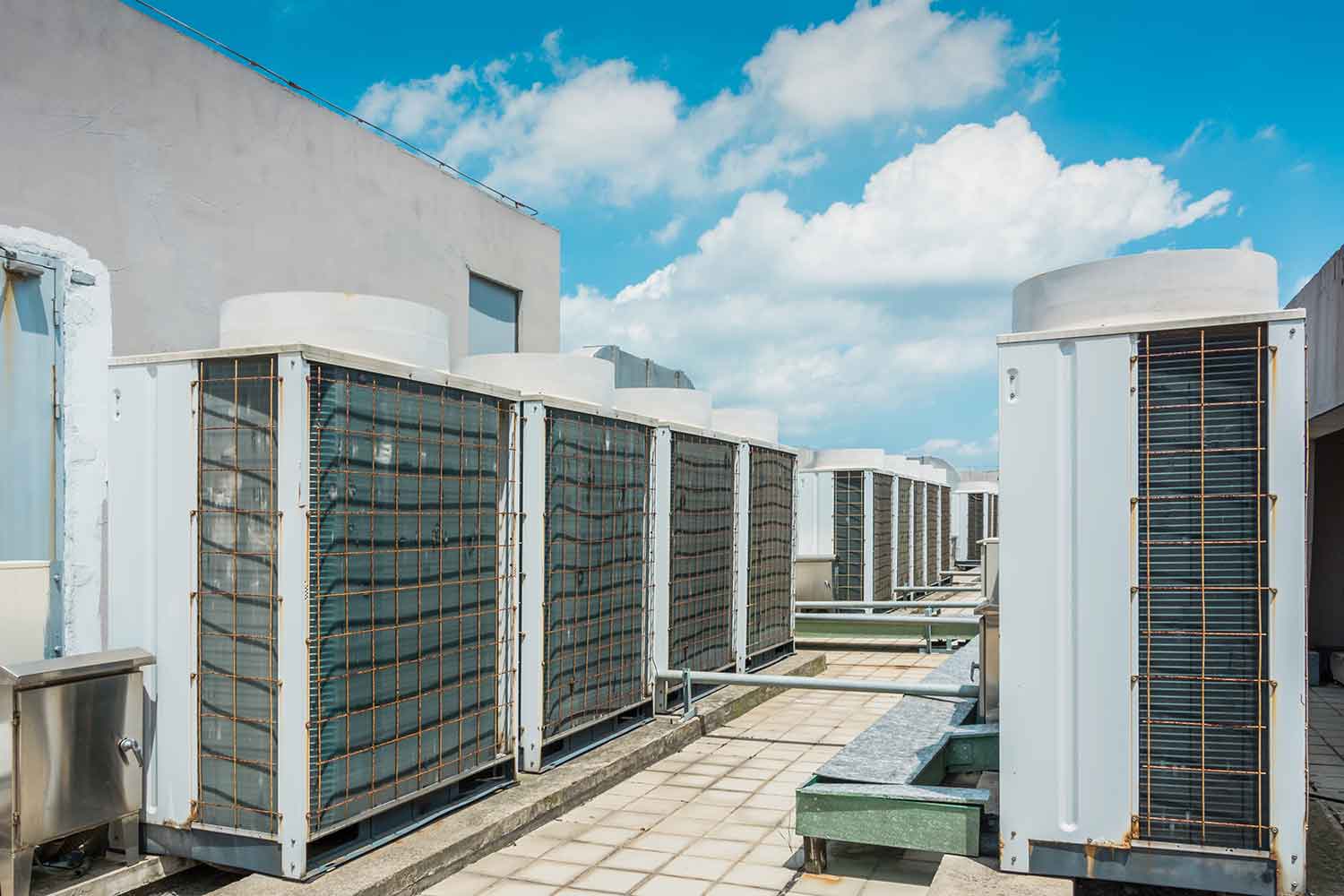
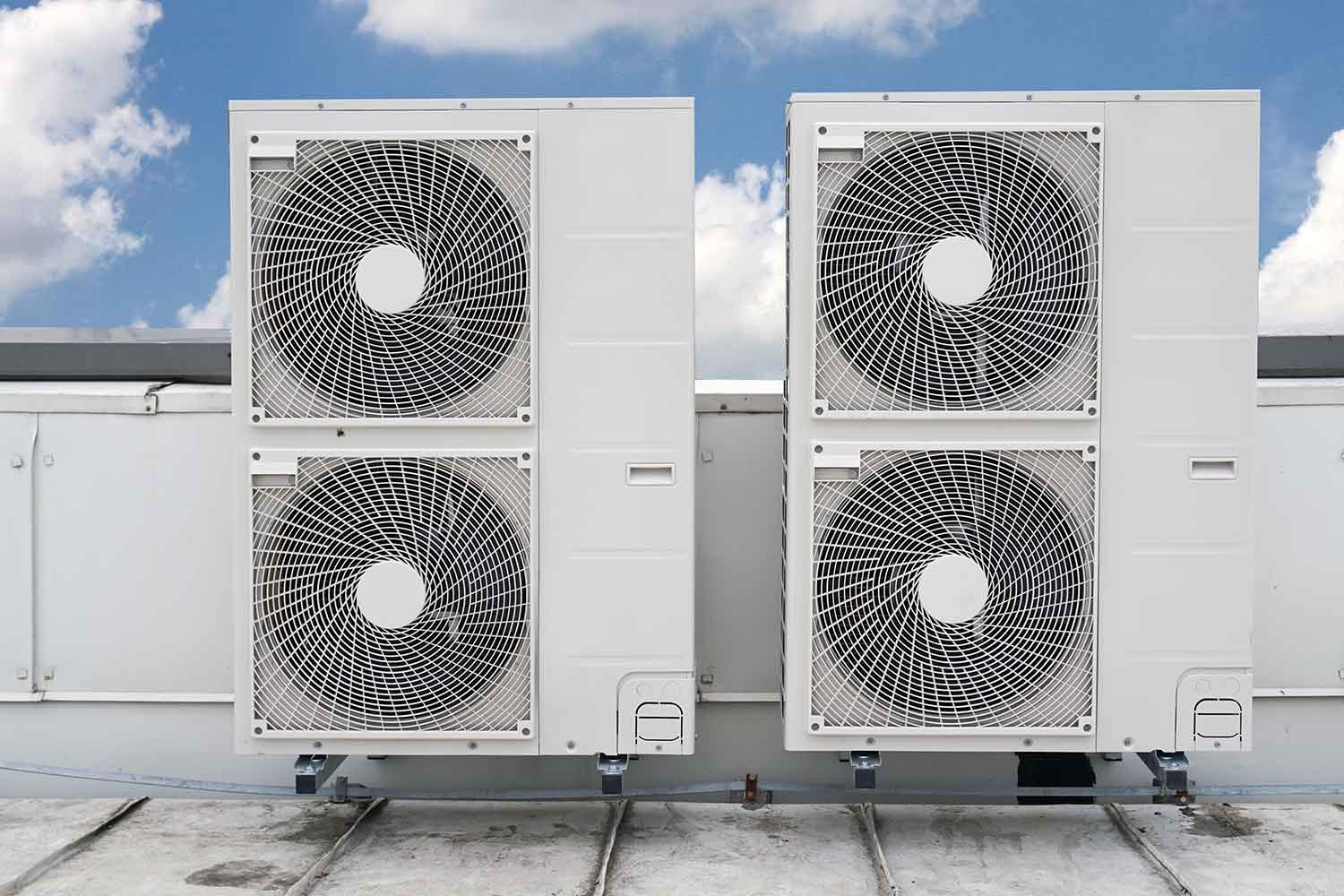
VRF or VRV System
VRF means variable refrigerant flow, while VRV means variable refrigerant volume. They represent the same thing. VRF/VRV air conditioning is the ideal solution for large offices or businesses like hotels, retail spaces etc. they are very efficient and easy to control. VRF/VRV systems are further broken down into two types. They are a heat pump and heat recovery. The heat pump can provide heating or cooling to a particular building or room. In contrast, heat recovery can provide heat or cold to different areas at once. This makes the heat recovery system an ideal choice for guest houses and hotels.
Knowing which Commercial Air Conditioning System to Choose?
Every Air Conditioning unit has a BTU rating that shows the amount of heat an AC can eliminate from a space. When you are considering the purchase of an Air Conditioning System, the foremost thing to take into consideration is;
the measurement or size of the room. You can determine the size of a room by multiplying its length by its width). Compare your measurement with the BTU to establish if the AC has the cooling capacity needed. Good technicians will measure your space and specify the type of AC units that meets your specifications. The performances of commercial ACs vary because there are a lot of factors that affect their output. Factors like the size of the area, the number of people in the area, etc. That is why it is imperative to use a reputable professional to help you plan and install your air conditioning system. And if you have repairs to be made, contact the company that installed your AC system. Most reputable air conditioning installers offer warrantees that cover maintenance contracts to ensure your AC unit is serviced regularly, thereby preventing or reducing sudden emergency repairs. If your AC is properly maintained, it can have a life expectancy of 10-15 years.
How long does it take to install a commercial AC
The time needed to install a commercial AC unit should be about 48 hours. Although this depends on the type of AC, you’re installing.
Why you should service your Commercial Air Conditioning System
For your AC to function optimally, it needs regular servicing at least once per year, depending on the usage. For example, the air conditioner’s filters, coils, and fins require regular maintenance and neglecting to do so will result in a decline in performance until it gets damaged extensively.
Why you should consider installing Commercial Air Conditioning
An AC system will help regulate the heat in a room, thereby providing a comfortable environment for you and your customers. Suppose an enclosed area is too warm or too cold. In that case, it can affect clients and customers, and some customers may not patronize you ever again. An overly cold or hot environment could also harm your health.
What are the disadvantages of Commercial Air Conditioning?
Commercial systems require many intricate thermostats to regulate the temperature in different sections of a building. Automatic thermostats save energy by reducing the need for particular areas to be cooled regularly; an example of such is storage spaces.
Commercial air conditioning needs an extensive drainage system. Domestic AC system may use just one condensate pan because of the level of usage. Commercial ACs require several containers and drainage pipes to guarantee that the evaporation process does not spill over from the pans. Besides the installation process and cost of maintenance, a commercial air conditioning system has no severe disadvantages. Contact Us today to see how our commercial air conditioning services can help you.